

What is Moose Boy?
Moose Boy is probably the most famous piece of silicon graffiti ever found — a tiny hidden drawing etched into a computer chip by one of the engineers who designed it. It shows a kid with moose antlers holding a sign that says "I'M MOOSE BOY" (sometimes "IM MOOSE BOY" or "I AM MOOSE BOY"). The drawing sits on a Motorola RF chip buried inside a crystal oscillator in the Nokia 5190 mobile phone. That phone launched in 1998 and was basically the iPhone of its day — everyone had one.
Impossibly Small
You can't see it without a microscope. It's made using the exact same photolithography process that creates the actual working circuits on the chip.
An Engineer's Inside Joke
Chip designers have been sneaking little drawings onto silicon for decades. It's like signing your work — except nobody can see it without serious magnification.
The Nokia 5190: Cultural Icon
The Nokia 5190 (sold as the 5110 in some markets) wasn't just a phone — it was a cultural moment. It launched in 1998 and quickly became one of the best-selling cellphones of that era. The thing was basically indestructible, dead simple to use, and the battery lasted forever. It introduced millions of people to mobile gaming through Snake, and you could swap out the faceplates to customize it. That was a big deal in 1998.
At 1.2 inches thick, it was a brick by today's standards. But in 1999 it felt sleek. Nokia stopped making it around 2001, but its legacy stuck around — not just as a turning point in mobile phones, but as the home of one of tech's best-hidden Easter eggs.
The 2022 Hunt
The serious search for Moose Boy kicked off in 2022. People online had been talking about a hidden doodle somewhere inside a Nokia 5190 for a while, but nobody had actually found and photographed it. That changed when it became a full-blown community treasure hunt — chip nerds, phone collectors, and tech historians all got in on it. After @Exciting__Electronics posted a video showing chip art inside a crystal oscillator, hunters started tearing apart their Nokia 5190s with fresh eyes.
Here's the thing that tripped everyone up: Moose Boy wasn't on the main circuit board. It was on a chip inside the crystal oscillator — a component inside another component. One layer deeper than anyone expected. That's why it took so long to find.
The Specific Chip
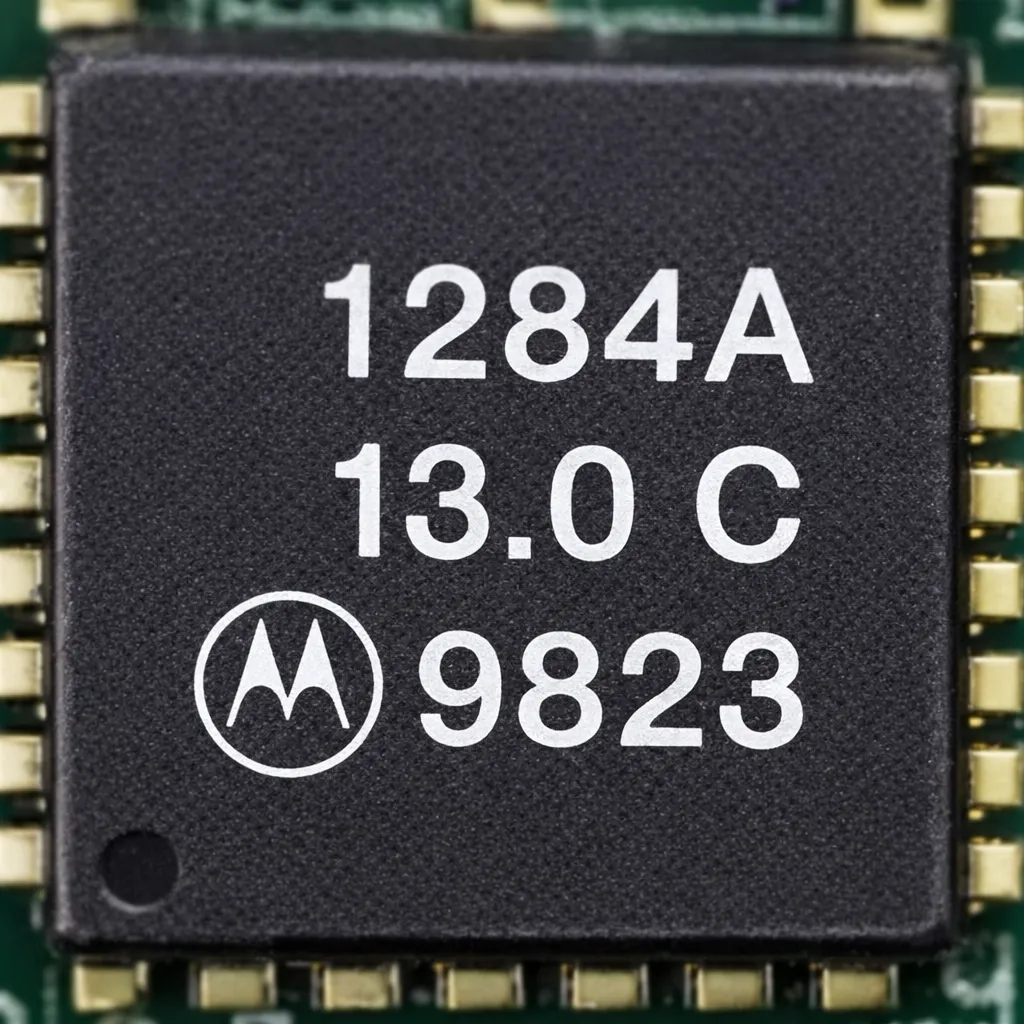
Moose Boy appears to live in crystal oscillator chips with markings like "1284A", "13.0C", and "9823". Here's what those numbers mean:
- 1284A - The part number for this specific chip variant
- 13.0C - Likely the oscillator frequency (13.0 MHz)
- 9823 - Date code in YYWW format — this chip was made in week 23 of 1998 (early June)
Heads up: not every Nokia 5190 crystal oscillator has Moose Boy. Only certain production runs with this specific Motorola chip seem to have the doodle.
To actually find Moose Boy, people had to:
- Completely take apart a Nokia 5190 to get to the crystal oscillator
- Crack open the crystal oscillator itself — just looking at the main board won't cut it
- Use a microscope at hundreds of times magnification
- Get lucky with the right production batch — not every phone has it
Origins & Inspiration
The "Moose" Connection
The best theory is that it's based on a friend or coworker of the chip engineer — someone nicknamed "Moose." The art style is clearly a riff on the Big Boy restaurant mascot, with those same chunky proportions. Just add antlers.
Part of a Wild Tradition
Moose Boy isn't alone. Engineers have hidden all kinds of stuff on chips over the years — a can of worms, chili peppers, Daffy Duck, Smurfs, Playboy bunnies, and tons of animals. There's a whole Silicon Zoo archive cataloging them.
Silicon Graffiti: A Dying Art
Before 1984, silicon graffiti actually had a legal purpose — these hidden signatures served as proof of copyright infringement if someone copied your chip design. Then the Semiconductor Chip Protection Act of 1984 gave automatic legal protection to chip layouts, so the doodles became purely personal — signatures, team jokes, little tributes.
Engineers would use empty space on chips to leave their mark, drawing with the same photolithography process that creates the working circuits. But this tradition is fading fast:
- Companies got strict about IP and maximizing every bit of silicon real estate
- Security reviews caught them — fabs started auditing designs more carefully
- Automated design tools don't leave room for personal touches
- Every micron matters now — modern chips are so dense there's just no spare space
Why Moose Boy Matters
It's not just a doodle. It's proof that a real person with a sense of humor built the technology we used every day. At a time when billions of chips roll off assembly lines, these Easter eggs remind you that actual humans — weird, creative, funny humans — designed the stuff inside your pocket.
The Nokia 5190 brought mobile communication to millions and became a symbol of the late '90s. The fact that such a culturally important device had this secret little drawing — hidden on a chip inside a component inside the phone — makes Moose Boy a genuinely cool piece of tech history and digital archaeology.
Collecting Nokia 5190 Phones
If you're into vintage phones or just think this whole story is cool, the Nokia 5190 has become a real collector's item. The catch: not every 5190 has Moose Boy. You need an early production model from the late '90s with the specific Motorola chipset. That makes confirmed units pretty valuable.
Even if you're not planning to crack one open, there's something great about owning a piece of this story. And if you do have the right tools and the patience, you might actually get to see Moose Boy with your own eyes.